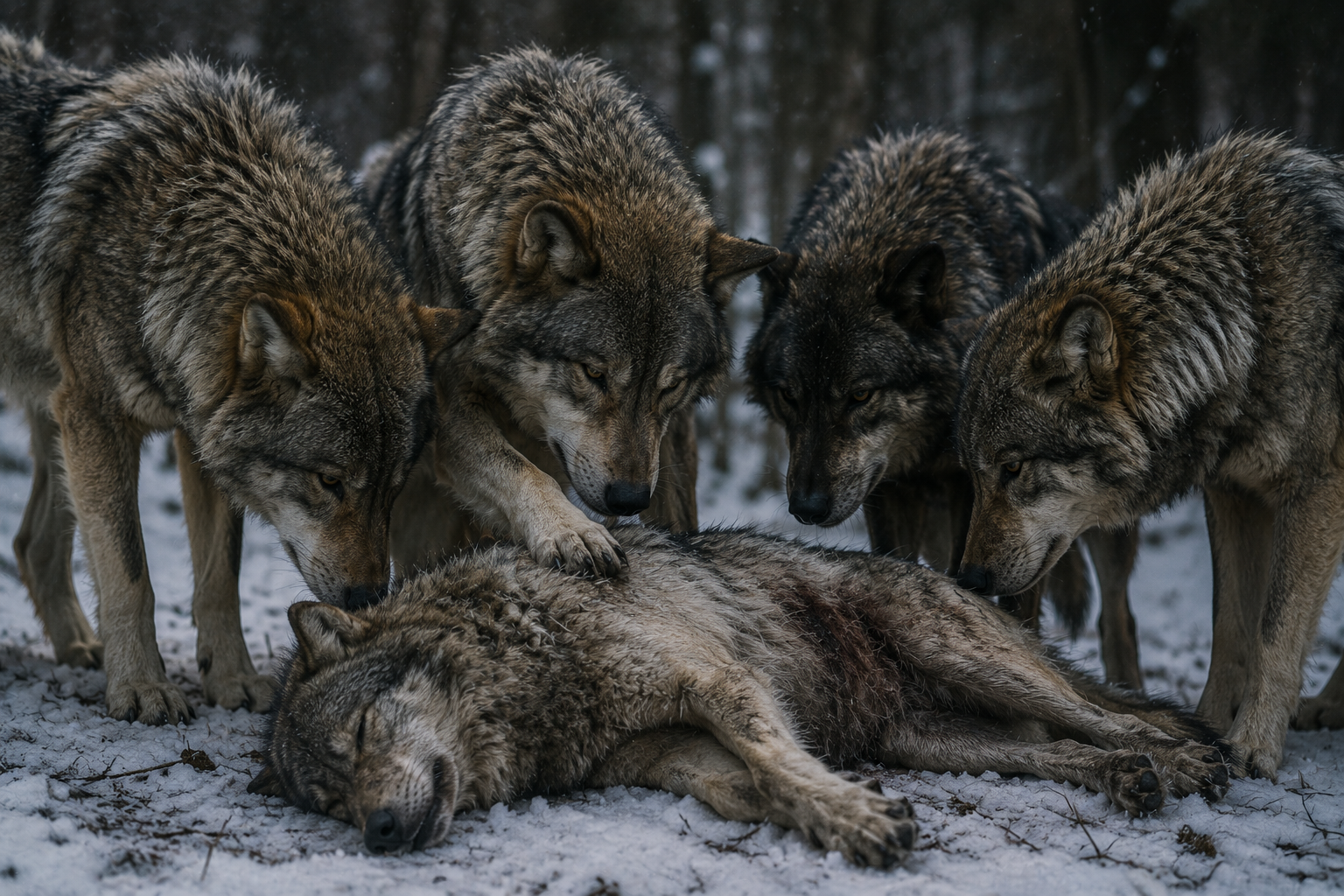
For decades, scientists dismissed animal “mourning” as instinct. Then they studied wolves more carefully. The findings changed how we view animal emotions forever.
🧠 THE SCIENCE IS CLEAR
Wolves possess many of the same brain structures humans use to process emotions, including a developed limbic system. The brain chemistry involved in attachment and loss—including hormones like oxytocin, vasopressin, and cortisol—functions similarly across mammalian species. Animals Around The GlobeAnimals Around The Globe
In other words: when wolves lose someone, their brains experience grief the same way ours do.
💔 WHAT HAPPENS WHEN AN ALPHA DIES
The loss of a breeding alpha wolf typically produces the most profound and prolonged mourning behaviors. When an alpha dies, the entire pack structure may be disrupted, leading to extended periods of apparent grief and social reorganization. Animals Around The Globe
Researcher L. David Mech documented cases where packs temporarily ceased hunting activities following an alpha’s death, sometimes leading to nutritional stress. Animals Around The Globe
Imagine being so heartbroken you stop eating. That’s what wolves do.
🐺 THE BONDS THAT REMAIN
Wolves live in cohesive family packs with cooperative hunting, pup rearing, territory defense. Individual fitness is tightly linked to the pack; loss of a member has direct ecological and reproductive consequences. Quora
These aren’t just pack members — they’re family. Many wolves mate for life. When one dies, the survivor often shows long-lasting behavioral changes.
👀 OBSERVED GRIEF BEHAVIORS
Scientists have documented wolves showing grief through:
🐺 Appetite changes — refusing food for days
🐺 Altered vocalizations — different howls after a loss
🐺 Seeking behavior — searching for the missing wolf
🐺 Reduced activity — withdrawal from normal pack life
🐺 Burying their dead — wild wolves have been documented burying the carcasses of pups Nature
🌍 WOLVES ARE NOT ALONE
Previously it was believed that grief was only a human emotion, but studies have shown that other animals have shown grief or grief-like states during the death of another animal, most notably elephants, wolves, apes, and goats. Wikipedia
There is evidence that animals experience grief in the loss of their group member, a mate, or their owner for many days. Some animals show their grief for their loss for many years. Wikipedia
💭 WHAT THIS MEANS
Dr. Barbara King, author of “How Animals Grieve,” argues that social mammals like wolves form deep attachment bonds that, when broken by death, produce genuine grief responses.
Wolves don’t just survive together. They love together. They lose together. They mourn together.
We share this planet with creatures who feel love and loss as deeply as we do.
Maybe it’s time we started treating them that way.
❤️ IF THIS MOVED YOU
🐺 Share this so more people know wolves grieve
🐺 Support wildlife protection where you can
🐺 Comment with a 🐺 if you’ll never look at wolves the same way again
Follow our page for more untold truths about animal emotions science is just beginning to understand.
📚 Sources: Research by Dr. Barbara King (“How Animals Grieve”), Dr. L. David Mech, and studies published in Scientific Reports/Nature.
